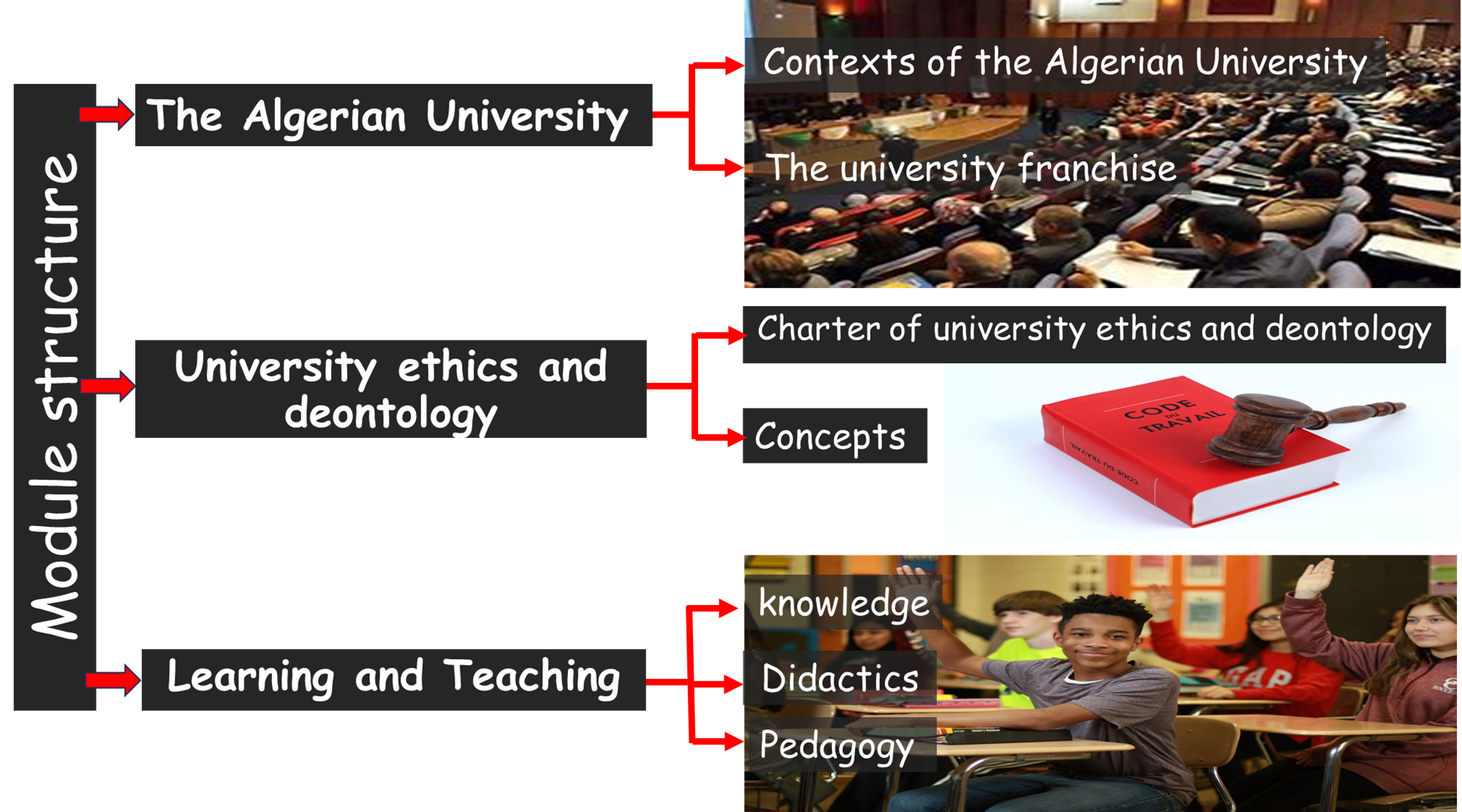
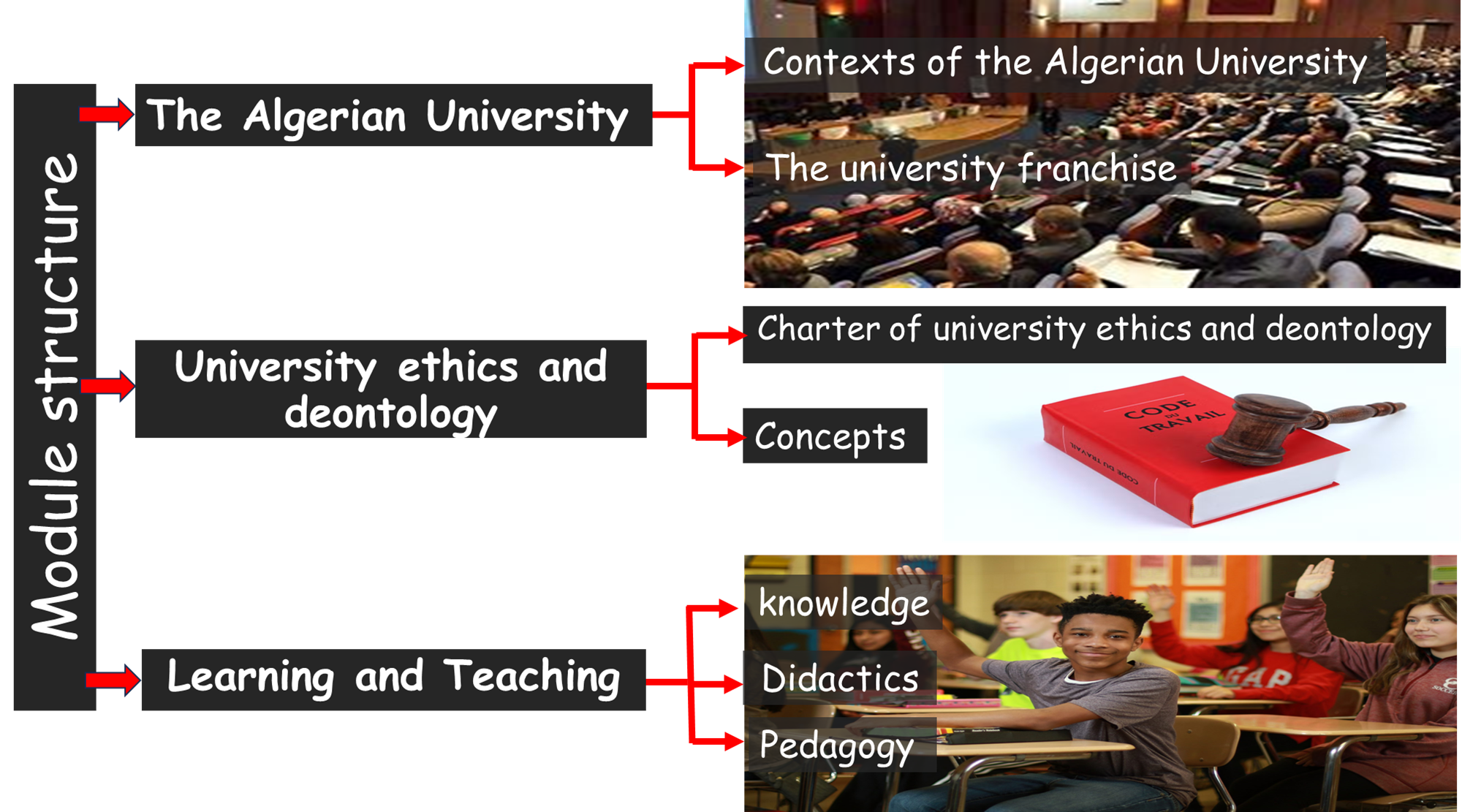
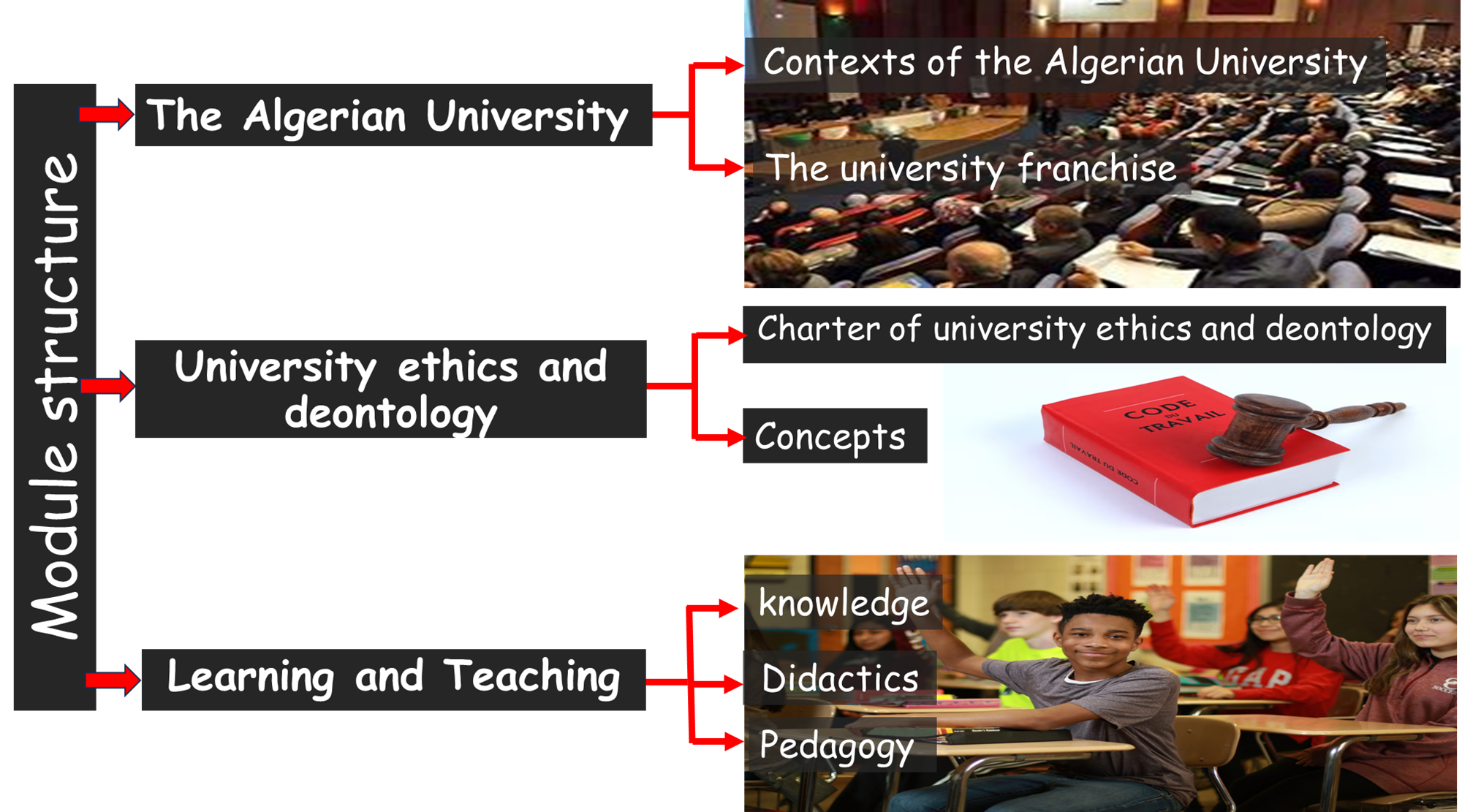
University Ethics and Deontology
الخطوط العريضة للقسم
-
-
Course Objectives:
1. The general objective of the course is to provide students with a comprehensive understanding of key concepts related to morality, ethics, deontology, professional values, and law.
2. By exploring these areas, students will develop critical thinking skills and ethical reasoning that will enable them to navigate complex moral dilemmas in their professional lives and make informed decisions that align with ethical standards and legal requirements.
-
Course Objectives:
1. The general objective of the course is to provide students with a comprehensive understanding of key concepts related to morality, ethics, deontology, professional values, and law.
2. By exploring these areas, students will develop critical thinking skills and ethical reasoning that will enable them to navigate complex moral dilemmas in their professional lives and make informed decisions that align with ethical standards and legal requirements.
-
Course Objectives:
1. The general objective of the course is to provide students with a comprehensive understanding of key concepts related to morality, ethics, deontology, professional values, and law.
2. By exploring these areas, students will develop critical thinking skills and ethical reasoning that will enable them to navigate complex moral dilemmas in their professional lives and make informed decisions that align with ethical standards and legal requirements.
-
-
-
فتحت: السبت، 9 نوفمبر 2024، 9:30 AMتستحق: السبت، 23 نوفمبر 2024، 9:30 AM
Conduct a comparative analysis of documents 1 and 2: the first presents the CHARTER OF ETHICS AND DEONTOLOGY FOR UNIVERSITIES from 2010, while the second focuses on the one from 2023. Identify and highlight the notable differences as well as the modifications made, emphasizing the impact of these changes on ethical and deontological practices within universities.
-
فتحت: الاثنين، 30 ديسمبر 2024، 9:30 AMتستحق: الاثنين، 13 يناير 2025، 9:30 AM
Conduct a comparative analysis of documents 1 and 2: the first presents the CHARTER OF ETHICS AND DEONTOLOGY FOR UNIVERSITIES from 2010, while the second focuses on the one from 2023. Identify and highlight the notable differences as well as the modifications made, emphasizing the impact of these changes on ethical and deontological practices within universities.
-
فتحت: الاثنين، 30 ديسمبر 2024، 9:30 AMتستحق: الاثنين، 13 يناير 2025، 9:30 AM
Conduct a comparative analysis of documents 1 and 2: the first presents the CHARTER OF ETHICS AND DEONTOLOGY FOR UNIVERSITIES from 2010, while the second focuses on the one from 2023. Identify and highlight the notable differences as well as the modifications made, emphasizing the impact of these changes on ethical and deontological practices within universities.
-
-
فتحت: السبت، 23 نوفمبر 2024، 12:00 AMتستحق: السبت، 30 نوفمبر 2024، 12:00 AM
The emergence of electronic environments has profoundly transformed the way information is produced, disseminated, and made accessible. However, this evolution has also raised significant challenges regarding the protection of copyright and intellectual property rights. Document 3 examines the use of plagiarism detection tools as an effective mechanism for ensuring copyright protection in these digital contexts.
6 Referring to Document 3, what methods and technological tools are employed for plagiarism detection? How do you assess the effectiveness of these tools in this context?
-
فتحت: الاثنين، 13 يناير 2025، 12:00 AMتستحق: الاثنين، 20 يناير 2025، 12:00 AM
The emergence of electronic environments has profoundly transformed the way information is produced, disseminated, and made accessible. However, this evolution has also raised significant challenges regarding the protection of copyright and intellectual property rights. Document 3 examines the use of plagiarism detection tools as an effective mechanism for ensuring copyright protection in these digital contexts.
6 Referring to Document 3, what methods and technological tools are employed for plagiarism detection? How do you assess the effectiveness of these tools in this context?
-
فتحت: الاثنين، 13 يناير 2025، 12:00 AMتستحق: الاثنين، 20 يناير 2025، 12:00 AM
The emergence of electronic environments has profoundly transformed the way information is produced, disseminated, and made accessible. However, this evolution has also raised significant challenges regarding the protection of copyright and intellectual property rights. Document 3 examines the use of plagiarism detection tools as an effective mechanism for ensuring copyright protection in these digital contexts.
6 Referring to Document 3, what methods and technological tools are employed for plagiarism detection? How do you assess the effectiveness of these tools in this context?
-
-
course objectives.
To develop skills in learning and teaching by integrating innovative pedagogical and didactic approaches to promote a deep understanding and practical application of acquired knowledge.
-
Since the 1900s, Maria Montessori's method "consisted of giving the child the opportunity to live naturally and to stimulate their spontaneity." More relevant than ever, her concepts are now taught to teachers who wish to incorporate more pedagogy into their lessons.
-
Freinet pedagogy is an educational approach developed by the French educator Célestin Freinet in the 1920s. It is based on the idea that learning should be child-centered and encourage autonomy, creativity, and personal expression. This method emphasizes learning through experience, observation, and collaborative work.
-
فتحت: السبت، 30 نوفمبر 2024، 12:00 AMتستحق: السبت، 7 ديسمبر 2024، 12:00 AM
Based on your prior knowledge and the content of Document 4, highlight the key elements related to pedagogy.
-
course objectives.
To develop skills in learning and teaching by integrating innovative pedagogical and didactic approaches to promote a deep understanding and practical application of acquired knowledge.
-
Since the 1900s, Maria Montessori's method "consisted of giving the child the opportunity to live naturally and to stimulate their spontaneity." More relevant than ever, her concepts are now taught to teachers who wish to incorporate more pedagogy into their lessons.
-
Freinet pedagogy is an educational approach developed by the French educator Célestin Freinet in the 1920s. It is based on the idea that learning should be child-centered and encourage autonomy, creativity, and personal expression. This method emphasizes learning through experience, observation, and collaborative work.
-
فتحت: الاثنين، 20 يناير 2025، 12:00 AMتستحق: الاثنين، 27 يناير 2025، 12:00 AM
Based on your prior knowledge and the content of Document 4, highlight the key elements related to pedagogy.
-
course objectives.
To develop skills in learning and teaching by integrating innovative pedagogical and didactic approaches to promote a deep understanding and practical application of acquired knowledge.
-
Since the 1900s, Maria Montessori's method "consisted of giving the child the opportunity to live naturally and to stimulate their spontaneity." More relevant than ever, her concepts are now taught to teachers who wish to incorporate more pedagogy into their lessons.
-
Freinet pedagogy is an educational approach developed by the French educator Célestin Freinet in the 1920s. It is based on the idea that learning should be child-centered and encourage autonomy, creativity, and personal expression. This method emphasizes learning through experience, observation, and collaborative work.
-
فتحت: الاثنين، 20 يناير 2025، 12:00 AMتستحق: الاثنين، 27 يناير 2025، 12:00 AM
Based on your prior knowledge and the content of Document 4, highlight the key elements related to pedagogy.
-