Methanization and biogas Phase 1
Section outline
-
-
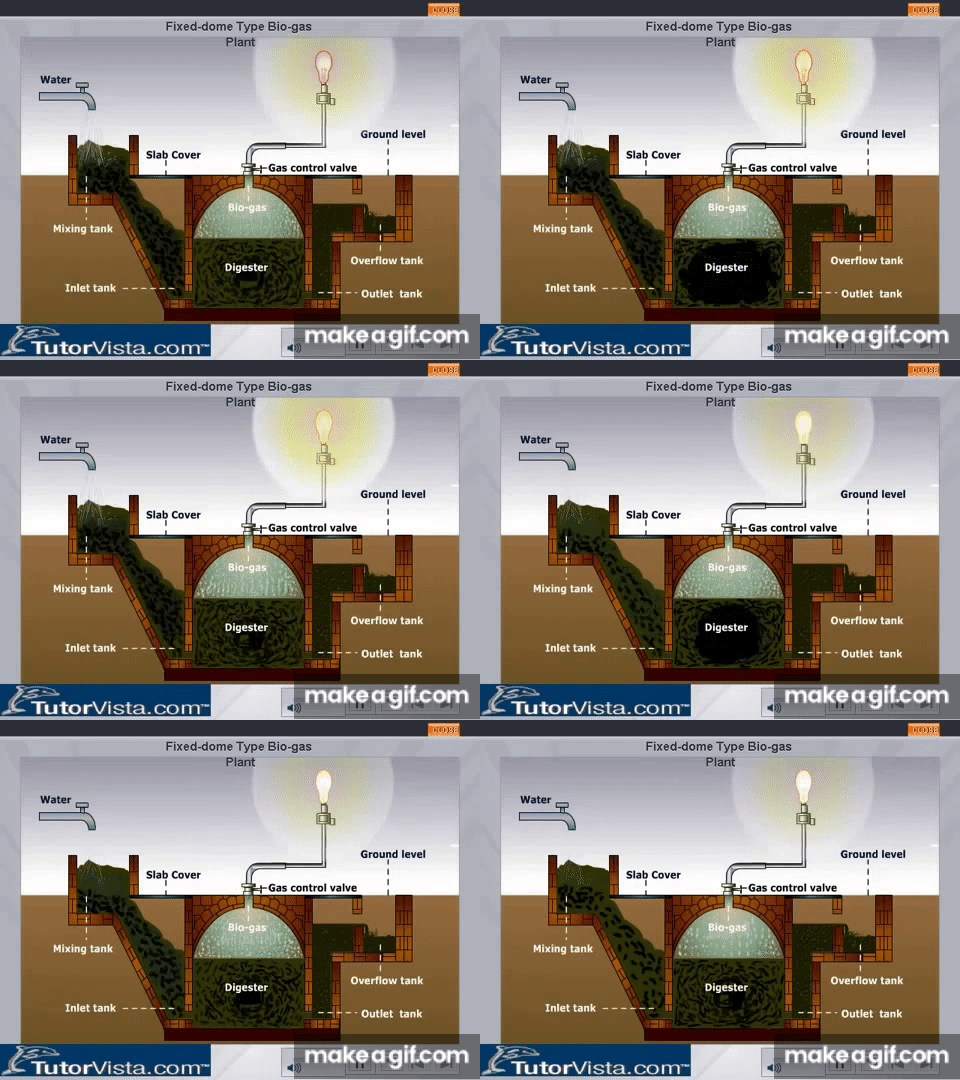
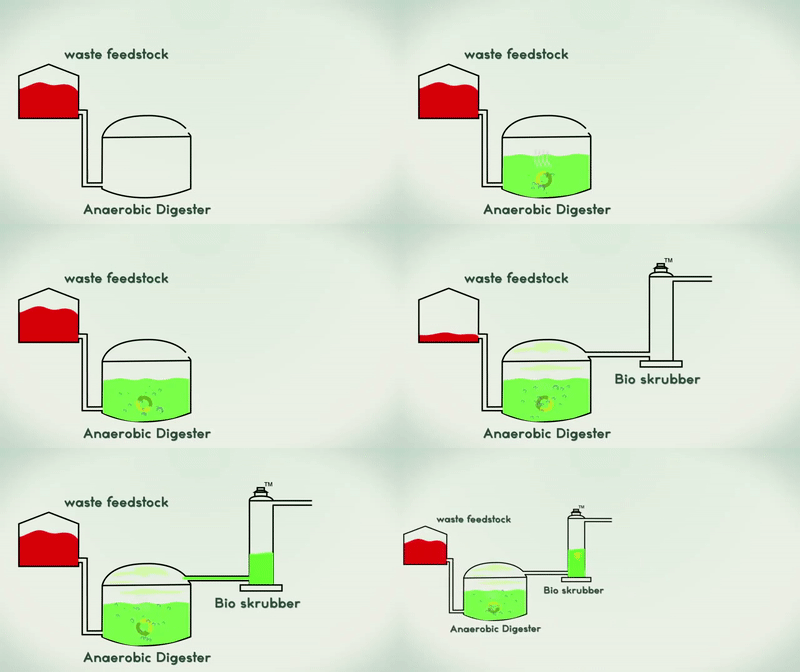
This course focuses on the natural process of depollution and energy production known as methanization (anaerobic digestion). In agricultural settings, methanization enables a dual valorization of livestock effluents and waste into biogas on one hand, and organic fertilizer (digestate) on the other, while contributing to the control of agricultural pollution. Students will master the fundamental biological, metabolic, and technical principles of this process.
-
-
-
-
Semester: Semester 5
-
Teaching Unit: Core Unit (UEF 1.5.2)
-
Subject Title: Methanization and Biogas: Phase 1
-
Total Hourly Volume (15 weeks): 67.5 hours
-
Weekly Volume: 3h Lecture / 1.5h Practical Work (TP)
-
Personal Work Volume: 82.5 hours
-
Credits: 6
-
Coefficient: 3
-
Instructor: Dr. Samia CHARIFI (Department of Natural and Life Sciences)
-
Contact: Samia.charifi@univ-biskra.dz
-
Evaluation Method:
-
Continuous Assessment (40%): Minimum 3 modes ( written quiz 6pts, présentations 2 Assiduity 2 pts ).
-
Final Exam (60%).
-
-
-
-
-
To successfully undertake this course, foundational knowledge in the following topics is recommended:
-
General and Organic Chemistry
-
Plant Biology & Animal Biology
-
Genetics, Biochemistry, and Microbiology
-
General Ecology and Botany
-
-
This prerequisite test is intended for 3 Licence’s students in recycling and Waste Valorization
The prerequisite test is available starting from the first week and is accessible with no time limit so that you can retake it. If your score is insufficient (below 50%), you will be directed to a self-paced, self-study course to follow at your own speed and progress.
If your score is insufficient, please click on the following links:
Chapitre3_cours1_biologie.pdf - Google Drive

-
-
-
By the end of this course, students will be able to:
-
Understand the biological mechanisms of waste degradation and renewable energy generation through anaerobic digestion.
-
Identify the metabolic stages and microbial populations involved in biomethanization.
-
Monitor, evaluate, and optimize the physico-chemical parameters controlling methanic fermentation.
-
Analyze biogas composition, purification systems, and energy valorization methods.
-
Characterize different types of methanization bioreactors and their operational modes.

-
-
-
-
Part 1: Waste Valorization through Methanization
-
I. Waste Valorization through Methanization:
-
I.1. Waste Management
-
I.2. Biological Waste Treatment (Generalities)
-
I.2.1. Main types of waste concerned
-
I.2.2. Energy metabolism and its implications (Theoretical aspects, Aerobic respiration, Anaerobic respiration and fermentations, Practical implications)
-
-
-
II. Anaerobic Digestion of Waste: Biomethanization:
-
II.1. Definition
-
II.2. Metabolic steps of methanization (Hydrolysis & Acidogenesis, Acetogenesis, Methanogenesis)
-
II.3. Key parameters of methanic fermentation:
-
Temperature
-
Redox potential
-
pH and buffer equilibrium
-
Hydrogen partial pressure
-
Nutrient requirements & C/N ratio
-
Moisture content & Pre-treatments
-
Methanization inhibitors
-
-
-
III. Biogas:
-
III.1. Definition & Characterization (Chemical composition, Properties, Energy valorization)
-
III.2. Methanization Bioreactors:
-
Classification by feeding mode, substrate type, and number of stages
-
-
III.3. Gas Purification Systems ($\text{CO}_2$ and $\text{H}_2\text{S}$ removal)
-
III.4. Advantages and disadvantages of anaerobic digestion
-
-
IV. The Rumen Ecosystem
-
-
-
-
Chapter Objectives
By the end of this chapter, students will be able to:
- Define waste management and waste valorization and explain their importance for environmental protection.
- Identify the main types of organic waste that can be treated through biological processes.
- Explain the principles of biological waste treatment and distinguish between aerobic and anaerobic processes.
- Describe the main energy metabolisms involved in the biological degradation of organic matter.
- Differentiate between aerobic respiration, anaerobic respiration, and fermentation based on their electron acceptors, metabolic pathways, and end products.
- Explain how microorganisms obtain energy from organic matter under different environmental conditions.
- Describe the practical and environmental implications of aerobic and anaerobic metabolisms in waste treatment.
- Explain the basic principle of anaerobic digestion (methanization) as a biological process for organic waste valorization.
- Identify the potential products of organic waste treatment, particularly biogas and stabilized organic matter.
- Relate microbial metabolism to the production of useful energy and the reduction of environmental pollution.

-

![Home [www.flexbio.de]](https://www.flexbio.de/fileadmin/user_upload/process/scope-of-delivery-anaerobic-wastewater-treatment-biogas-utilization-aerobic-polishing.gif)