Lecture 1. Introduction to Course Design in English Language Teaching
الخطوط العريضة للقسم
-
-
-
-
1 Key Concepts:
-
Course Design: The process of creating a structured plan for teaching a language, including goals, content, teaching methods, and assessment.
-
Curriculum: A broader term encompassing the overall educational framework, including policies, goals, content, and evaluation methods.
-
Syllabus: A detailed outline of topics, materials, and assessment tools for a particular course, forming part of the larger curriculum.
2 Components of Course Design:
-
Learners: Understanding learners' needs, proficiency levels, and learning preferences.
-
Instructional Procedures: Teaching methods and classroom activities.
-
Materials: Selection and adaptation of teaching resources.
-
Assessment: Methods to evaluate learners' progress and achievement.
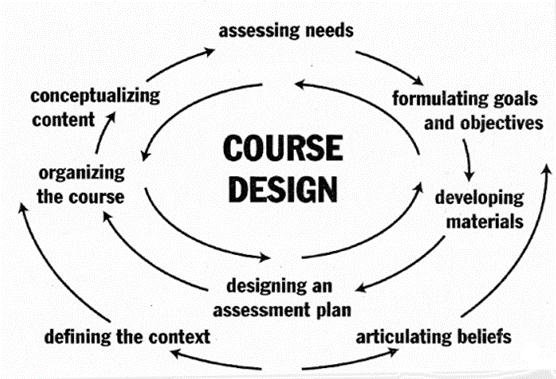
3 The Course Design Process:
-
Needs Analysis: Identifying learners' needs and expectations.
-
Setting Goals and Objectives: Establishing clear learning outcomes.
-
Content Selection and Organization: Structuring lessons and materials.
-
Implementation: Delivering the course.
-
Evaluation and Revision: Assessing effectiveness and making improvements.
-
-
-
-
This video by Sami Berbache introduces basic concepts such as course, syllabus, and curriculum and simplifies their definitions for students. The video presents a contextualization of the notion of course design in the field of TEFL (Teaching English as a Foreign Language)
-
-
-
Task: Reflect on a language course you have taken or taught. Identify the following:
-
The course objectives.
-
The syllabus type (e.g., skill-based, task-based, content-based).
-
The teaching methods used.
-
One area for improvement in the course design.
Submit your reflections in 200-300 words.
-
-
-