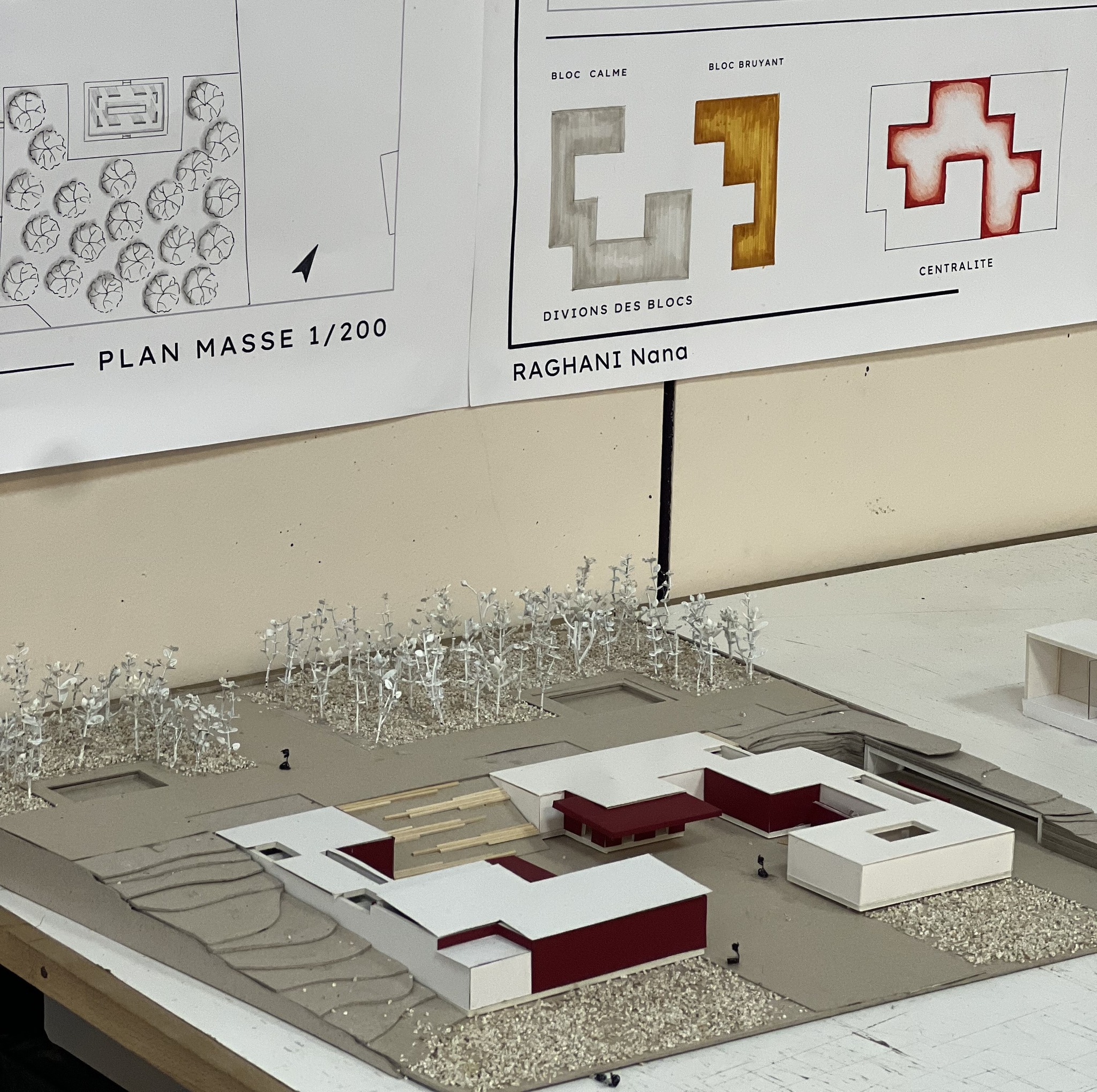
This semester is devoted to studying and integrating psychophysiological and environmental constraints into an architectural project, and therefore into a design process. Psychophysiological constraints are understood as the interaction of physical phenomena (noise, light, heat, cold, etc.) with a process of perception within a spatial configuration. These constraints are first addressed through the interior environments of the building. Environmental constraints then place the building within the influence of its natural and/or built external context. The various dimensions (environmental, landscape, functional, morphological, etc.) must be taken into account. This stage provides an opportunity to raise students' awareness of environmental issues related to sustainability.
- Créateur de cours: linda benchikha
- Créateur de cours: Sara Zineddine