- Créateur de cours: OumKeltoum Kribaa كريبع
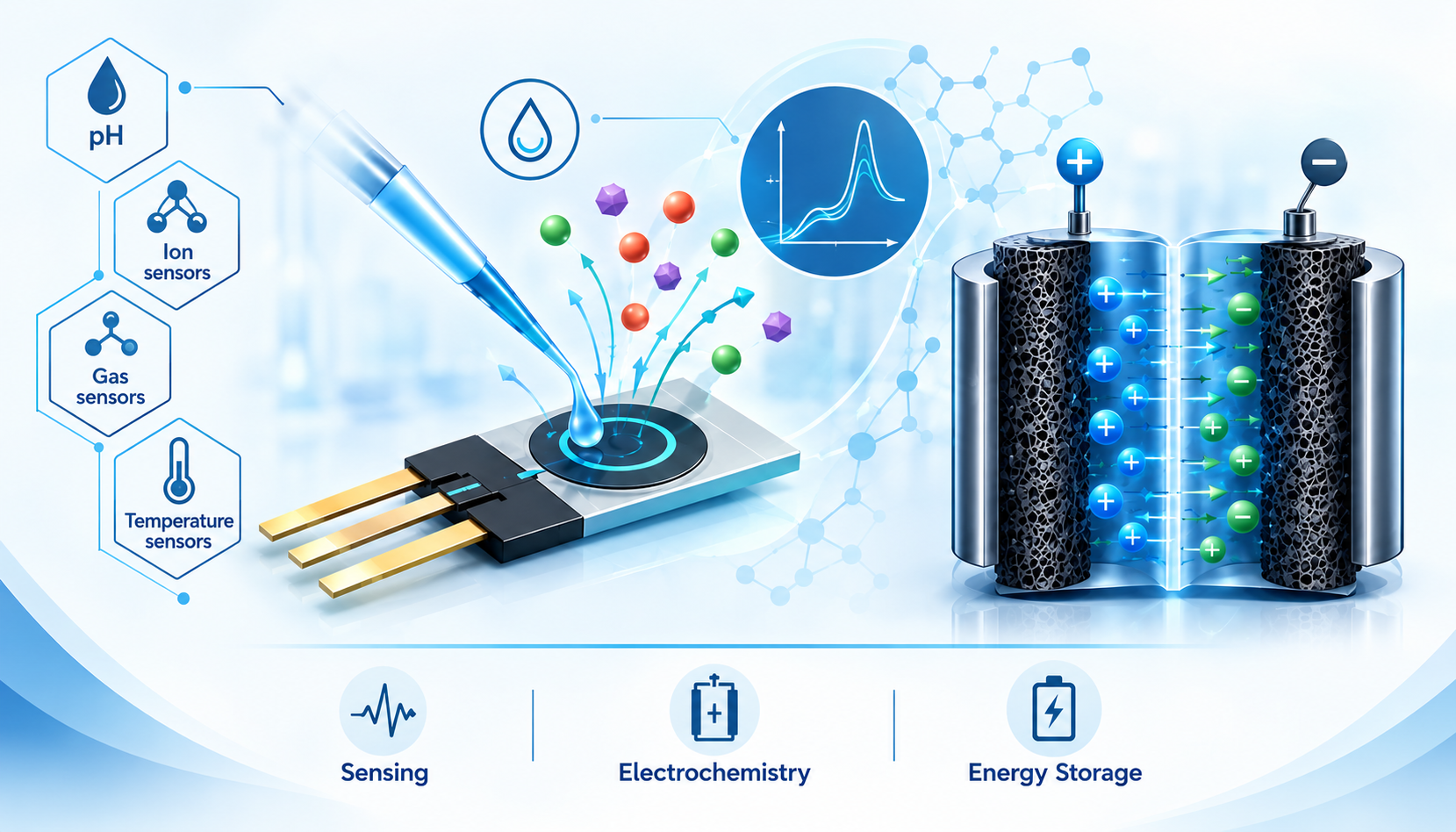
Electrochemical Sensors and Supercapacitors is a course that introduces two important applications of electrochemical science: chemical and electrochemical sensing and electrochemical energy storage. The course explores how electrochemical principles, interfaces, and materials can be used either to convert chemical information into measurable signals or to store and deliver electrical energy.
The first part of the course focuses on chemical sensors and electrochemical sensors. It covers the fundamental concepts of sensing, recognition, transduction, measurement chains, and sensor performance. Students will study the main types of electrochemical sensors and their operating principles, including potentiometric, amperometric, voltammetric, and conductometric sensors. Particular attention is given to the role of the electrode–electrolyte interface and to the use of advanced materials such as nanoparticles, metal oxides, graphene-based materials, porous carbons, conducting polymers, metal–organic frameworks (MOFs), and MXenes in sensor development.
The second part of the course deals with supercapacitors, focusing on the principles of electrochemical energy storage and the mechanisms responsible for charge storage. Students will examine electrical double-layer capacitance, pseudocapacitance, and hybrid charge-storage mechanisms, as well as the influence of electrode materials, electrolytes, separators, and current collectors on device performance. Different classes of electrode materials, including carbon-based materials, transition-metal oxides, and conducting polymers, will be discussed.
- Créateur de cours: rayane loughlani
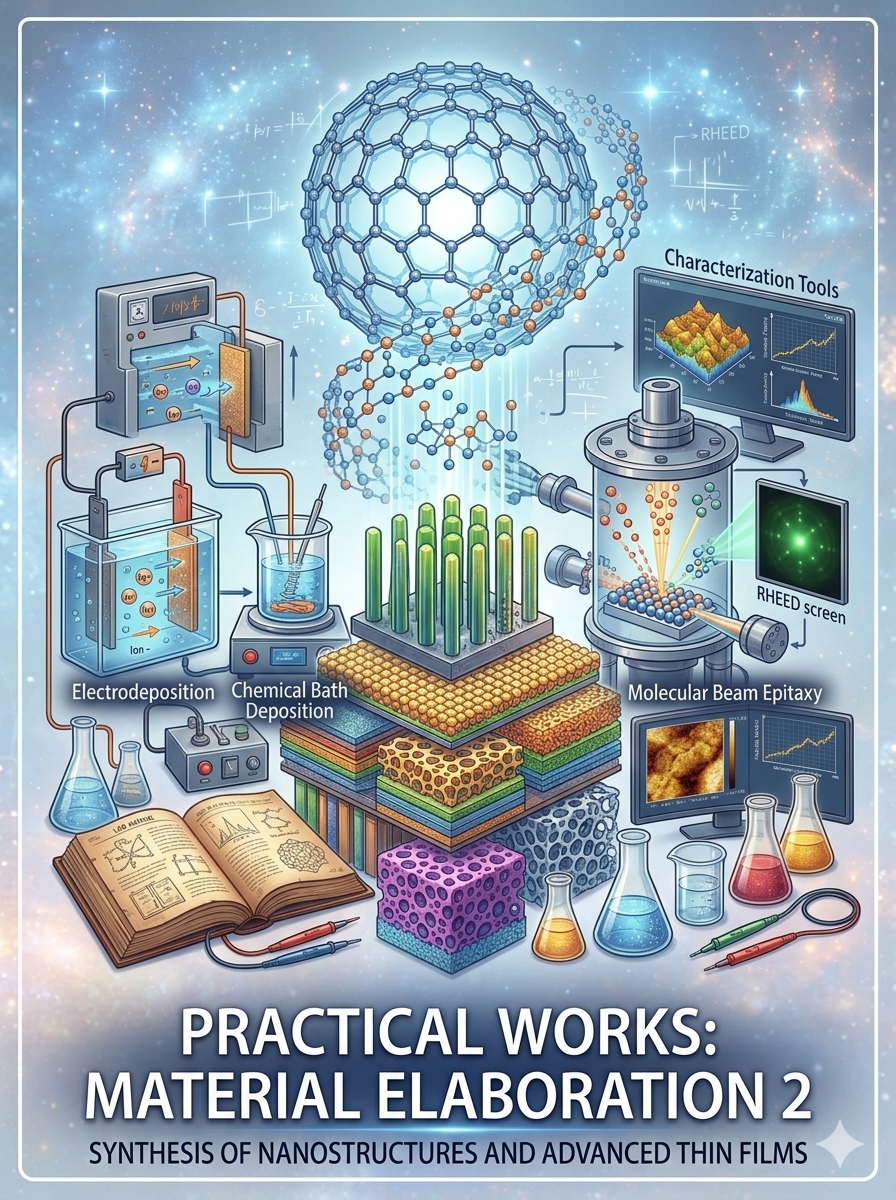
Materials Elaboration 2 is a practical module designed to introduce Master 2 students in Materials Chemistry to experimental methods for the synthesis of nanostructured materials and thin films.
The module focuses on selected preparation techniques, including electrodeposition, chemical bath deposition (CBD), and hydrothermal synthesis. Students will explore the elaboration of semiconductor materials, metal oxides, and doped nanostructures, with emphasis on the relationship between synthesis conditions, structural organization, and material properties.
Through practical activities, students will develop experimental skills in materials preparation, data analysis, and interpretation of results obtained from relevant characterization techniques.
- Créateur de cours: maroua guidoum
- Créateur de cours: rayane loughlani
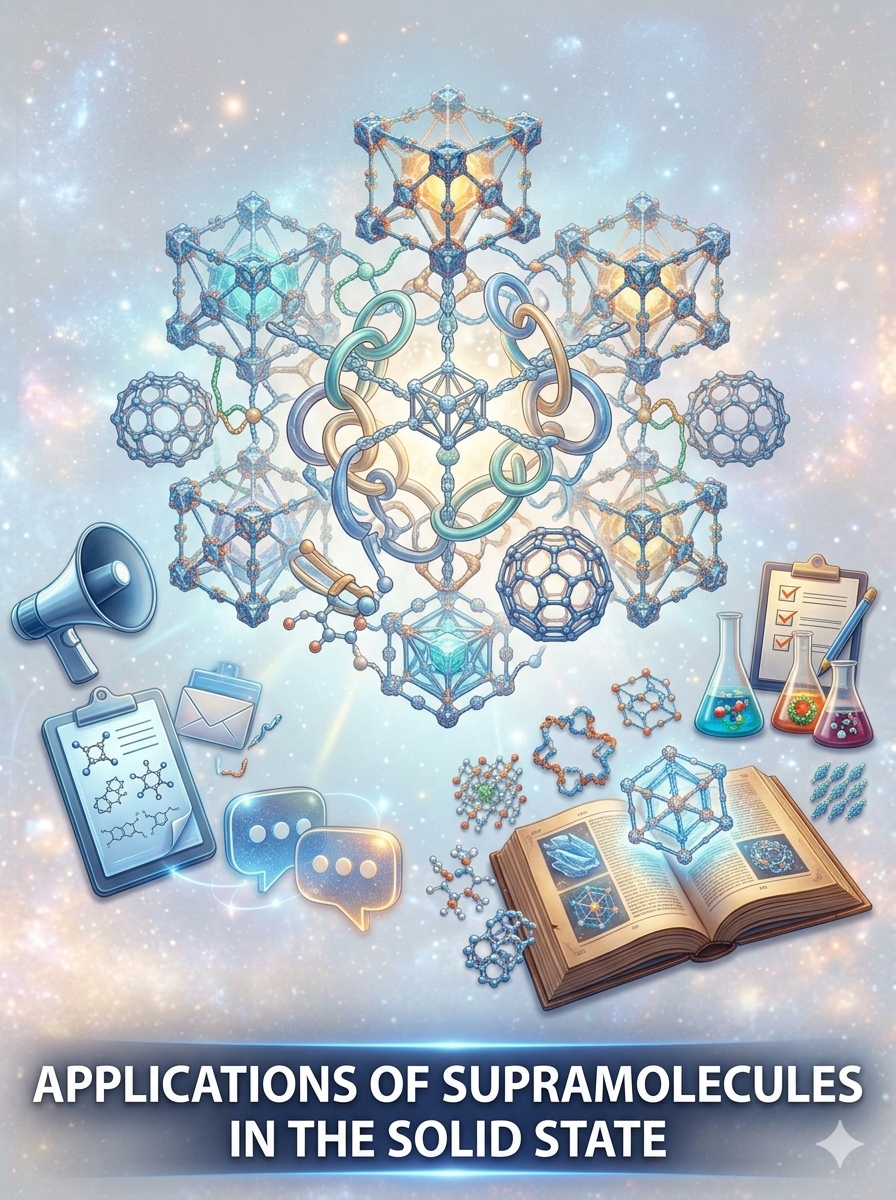
Applications of Supramolecules in the Solid State is a Master 2 course in Materials Chemistry that introduces the principles of supramolecular chemistry and their application to the design and understanding of functional materials. The course explores how molecules organize through non-covalent interactions to form ordered structures and how molecular and crystal organization influence the physicochemical properties of materials. It covers the fundamental concepts of supramolecular chemistry in the solid state, crystalline supramolecular materials, their physicochemical properties, and their technological applications. Particular attention is given to the relationship between molecular interactions, structural organization, material properties, and functional performance.
- Créateur de cours: maroua guidoum