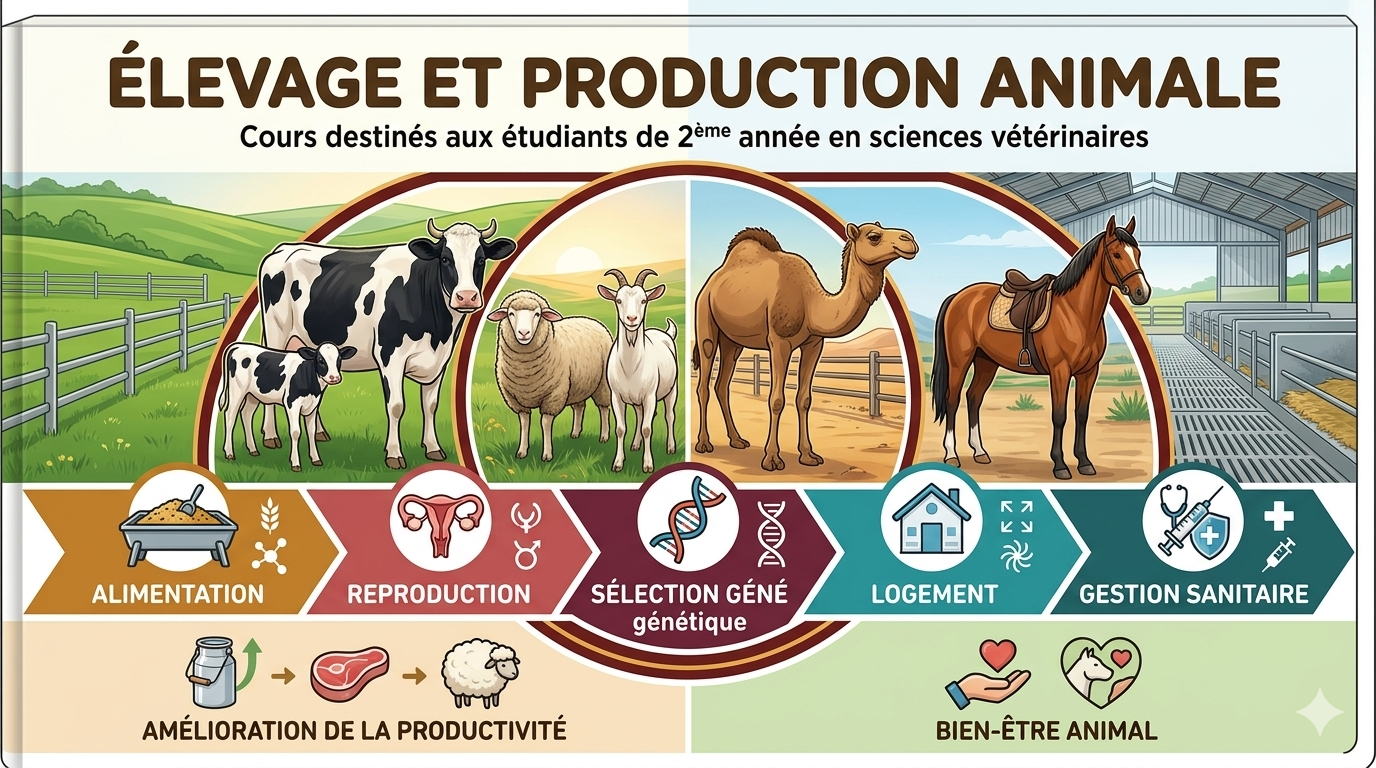
Ce cours d’Élevage et Production Animale est destiné aux étudiants de 2ème année en sciences vétérinaires. Il a pour objectif de fournir les bases scientifiques et techniques nécessaires à la compréhension des systèmes d’élevage et à l’optimisation des productions animales dans le respect du bien-être animal et des exigences économiques.
Le cours aborde les principes fondamentaux de la conduite des élevages (alimentation, reproduction, sélection génétique, logement et gestion sanitaire), ainsi que les facteurs influençant les performances zootechniques des principales espèces d’intérêt vétérinaire (bovins, ovins, caprins, camelins et équins ).
Une attention particulière est accordée à l’amélioration de la productivité (viande, lait, laine), à la qualité des produits d’origine animale et à la durabilité des systèmes d’élevage.
- Créateur de cours: radja zineddine

Animal nutrition is a scientific field that studies the dietary needs of animals and how nutrients are consumed, digested, absorbed, and utilized in the body. It examines the roles of essential nutrients; proteins, carbohydrates, lipids, vitamins, minerals, and water, in supporting maintenance, growth, reproduction, and production.
The discipline also considers differences in feeding behavior and digestive systems among animals (such as ruminants, monogastric animals, and poultry), as well as factors affecting feed quality and efficiency. Understanding animal nutrition is crucial for optimizing health, improving productivity, and ensuring sustainable animal management in both agricultural and companion animal settings.
- Créateur de cours: AHMED AMINE BOUAZID
- Créateur de cours: adel chala
- Créateur de cours: asma houfani
Scientific English is an essential component of modern veterinary training. Here is an introduction and the key points of this module:
International language:
English is the dominant language of scientific research and communication in the veterinary field.
Most scientific publications, conferences, and online resources are in English.
Access to information:
Proficiency in scientific English allows students to access the latest advances and discoveries in the veterinary field.
This makes it easier to read and understand scientific literature, textbooks, and specialized articles.
International mobility:
Proficiency in English opens doors for students who wish to pursue further studies, internships, or work abroad.
It promotes international exchange and collaboration with veterinarians around the world.
- Créateur de cours: abdeldjalil dahmane
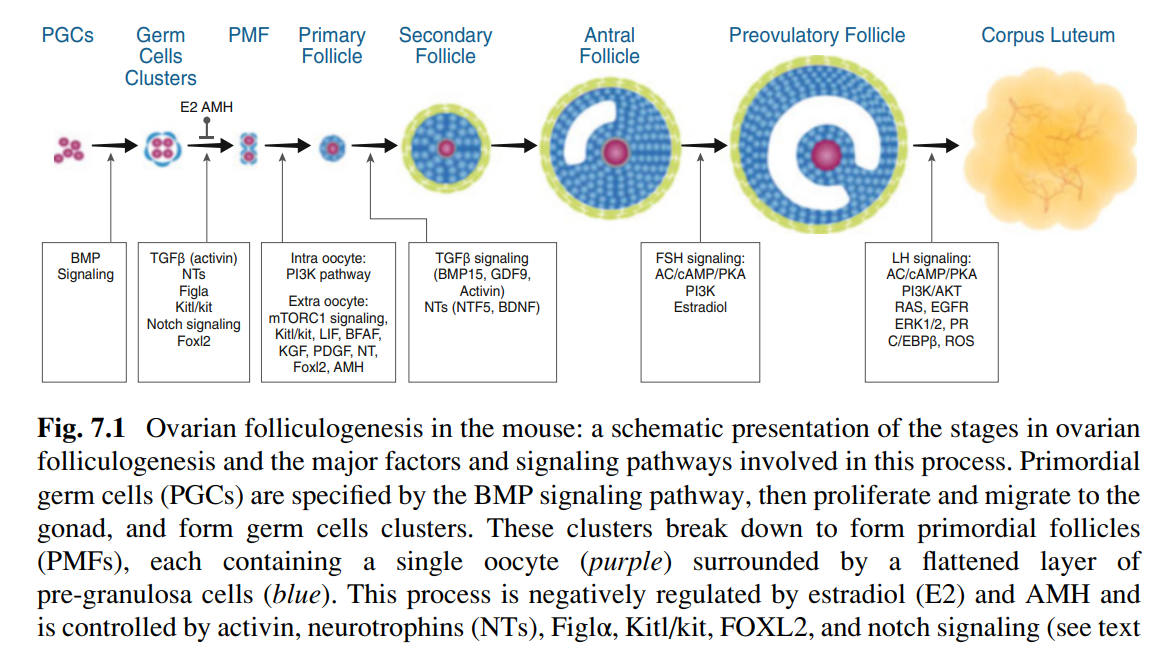
Welcome to this course on Reproductive Physiology, an essential part of your veterinary science training. Reproduction is a fundamental process for the survival and continuity of animal species, and a thorough understanding of its physiology is crucial for any veterinarian.
This course will allow you to explore the hormonal, cellular, and tissue mechanisms that govern reproduction in animals. You will learn not only about the biological aspects of reproduction, but also their impact on animal health, livestock management, and species conservation.
The importance of this course lies in its practical application: mastering reproductive physiology will prepare you to diagnose and treat reproductive disorders, optimize reproduction in a livestock context, and participate in conservation programs for endangered species. You will thus be better equipped to meet contemporary challenges in the veterinary field and contribute to animal health and welfare.
We invite you to fully engage with this fascinating subject, as the knowledge you gain here will be valuable tools throughout your career.
- Créateur de cours: abdeldjalil dahmane