
The Research Methodology course introduces L3 students to the basic principles and skills needed to understand and carry out academic research. It provides students with a foundation in research concepts, procedures, and techniques that will help them become more effective academic learners and prepare them for future research projects. The course introduces students to the nature and purpose of research, different types of research, sources of knowledge, basic scientific reasoning, the concept of theory, evidence, and the main stages involved in conducting research. Particular attention is given to developing students' ability to find, understand, organise, evaluate, and present academic information.
- منشئ المقرر: Hanane Saihi
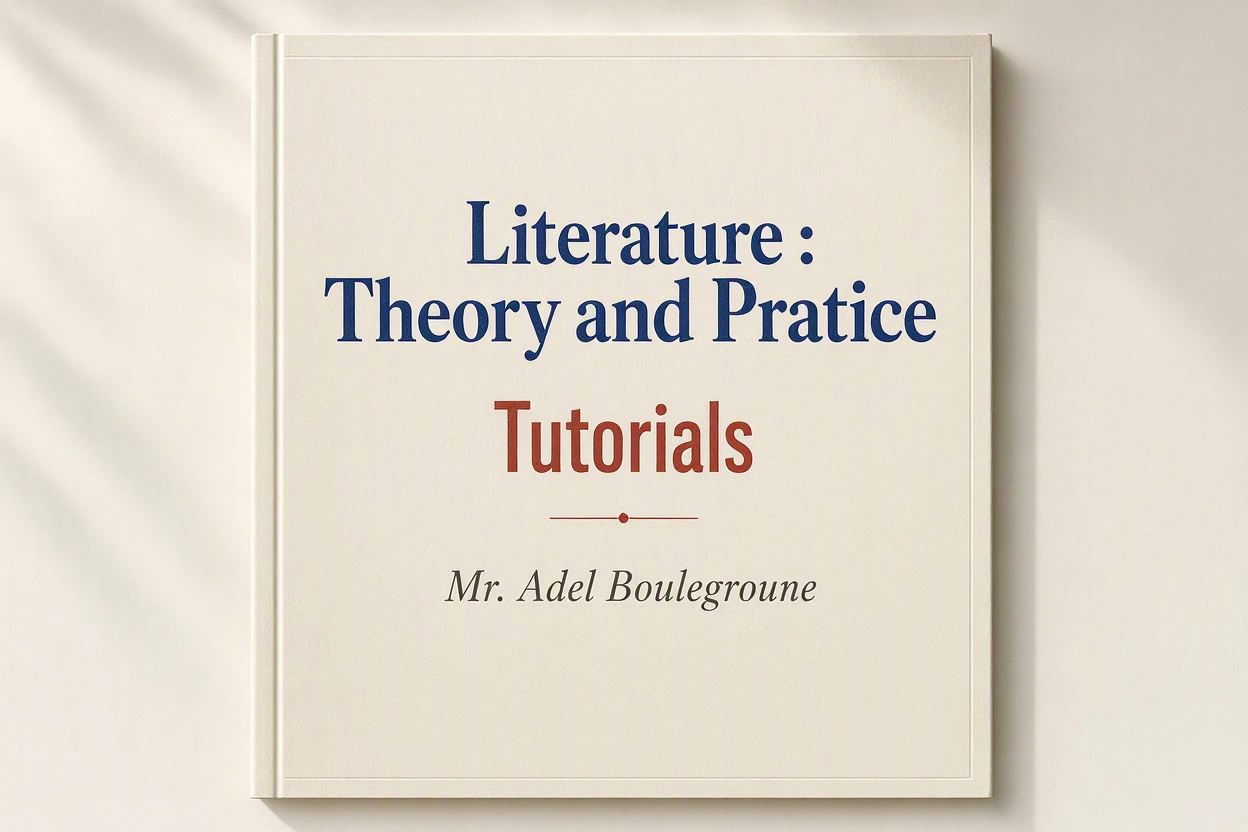
The tutorial sessions of Literature: Theory and Practice (Semester 5) are designed to complement the lectures through the practical study and critical analysis of selected literary texts, historical documents, and theoretical materials. They focus on developing students’ abilities to interpret literary works thematically and stylistically and to examine their historical, cultural, and intellectual contexts. The sessions cover the study of historical and theoretical documents related to British Modernism, biographical and literary perspectives on selected modernist writers, and the analysis of representative works by James Joyce, Virginia Woolf, and Joseph Conrad. Particular attention is given to modernist themes and techniques, including identity, gender, class, race, empire, and modernist aesthetics. The tutorials also address the historical and cultural background of African American slave narratives and the analysis of Frederick Douglass’s Narrative of the Life of Frederick Douglass: A Slave Narrative, with emphasis on its representation of freedom. Through close reading, textual analysis, and classroom discussion, students are encouraged to develop their critical thinking, interpretative, and analytical skills and to engage independently with literary texts.
- منشئ المقرر: Adel Boulegroune