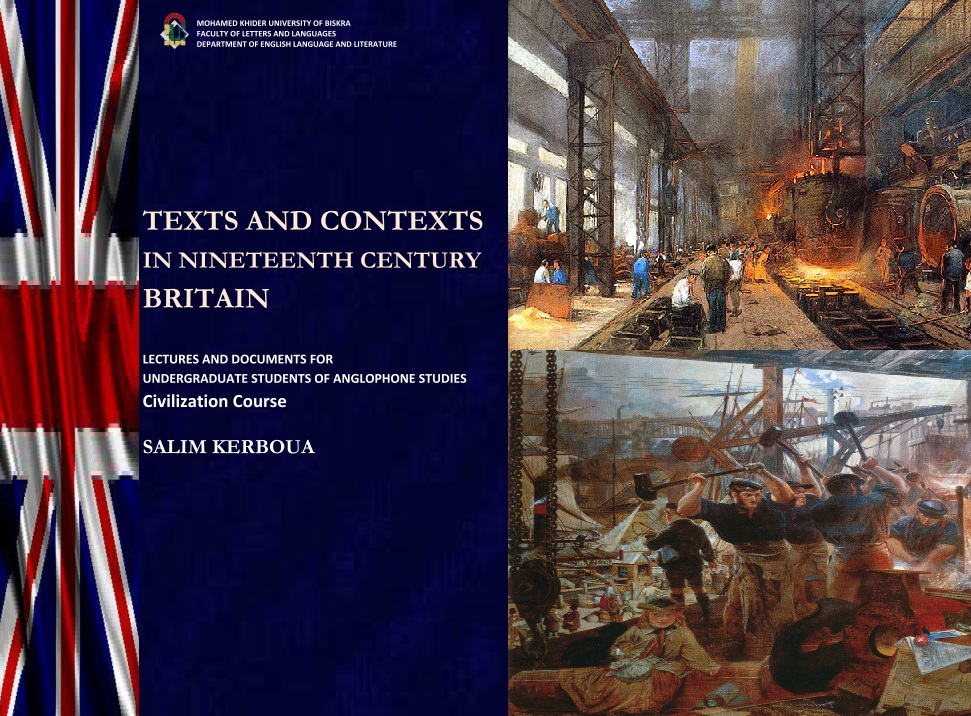
The late 18th and 19th centuries were critical in the shaping of contemporary Britain. The course looks into those transformations that were brought about by the Agricultural and Industrial Revolutions, and the political and social upheavals and reforms of the 19th century. The course also tackles the rise and expansion of the British Empire and the ideologies behind what historian John Darwin calls the "British World-System."
- منشئ المقرر: Salim Kerboua
The course of linguistics introduces students to the scientific study of language and the major theories and approaches that have shaped modern linguistics. It explores the development of linguistic thought during the 20th century, with particular attention to the contributions of Ferdinand de Saussure, Leonard Bloomfield, Edward Sapir, and Noam Chomsky. Students examine major linguistic schools and approaches, including Structuralism, Functionalism, and Mentalism/Generative Linguistics, as well as key concepts related to language structure and use. The course also provides an introduction to interdisciplinary fields such as sociolinguistics, psycholinguistics, and applied linguistics.
The course of phonetics introduces students to the study and description of speech sounds, with particular emphasis on English pronunciation. It familiarizes students with the International Phonetic Alphabet (IPA) and the British transcription system and develops their ability to transcribe and analyze English words and utterances. The course covers word stress in simple and complex words, the distinctive function of stress, sentence stress, connected speech, and intonation. Students also explore how stress, rhythm, and intonation contribute to meaning and effective communication in spoken English.
- منشئ المقرر: saliha chelli