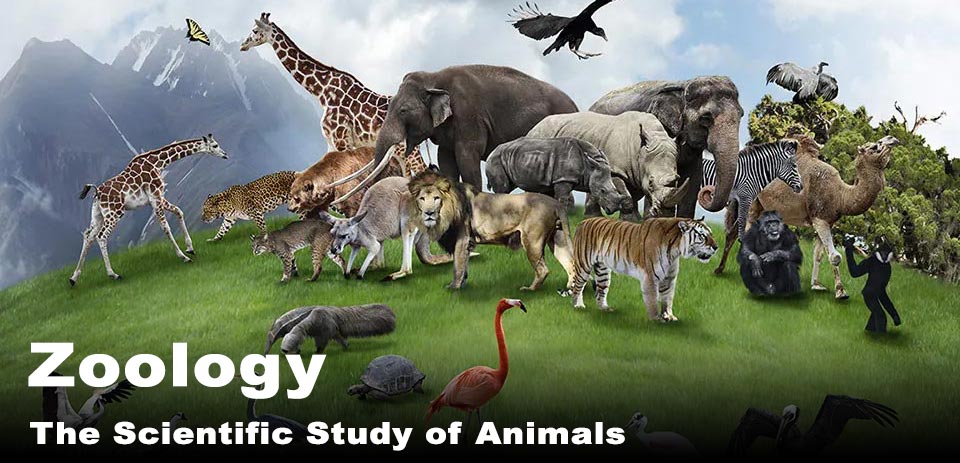
oology is the branch of biology that deals with the scientific study of animals, including their diversity, structure, classification, functions, reproduction, development, evolution, and relationships with their environment. The word zoology comes from two Greek words: Zoon, meaning animal, and Logos, meaning study or science. The animal kingdom includes a wide variety of organisms, ranging from simple invertebrates to complex vertebrates, such as fish, amphibians, reptiles, birds, and mammals. Zoology helps us understand the general characteristics of animals, their anatomical and physiological organization, their life cycles, and their adaptation to different environments. It is a fundamental discipline in veterinary medicine because it provides the basic scientific knowledge necessary to understand animal biology before studying animal diseases, their diagnosis, prevention, and treatment. It also plays an important role in understanding parasites, disease vectors, animal reproduction, behaviour, biodiversity, and the relationships between animals, humans, and the environment. Therefore, the study of zoology represents an essential foundation for future veterinarians, enabling them to better understand the animal world and its importance in animal health, livestock production, wildlife conservation, and public health.
- Course creator: radja zineddine
La génétique est la science de l’hérédité et des variations. Elle occupe une place de choix dans toutes les sciences du vivant.
La Génétique est l’étude des gènes et de leurs effets sur les organismes vivants. Les informations contenues dans les gènes d’un organisme sont à l’origine de son apparence, de ses fonctions et de sa survie et définissent en grande partie ses similitudes et ses différences par rapport à d’autres organismes.
- Course creator: Asma Amina FOUGHALI
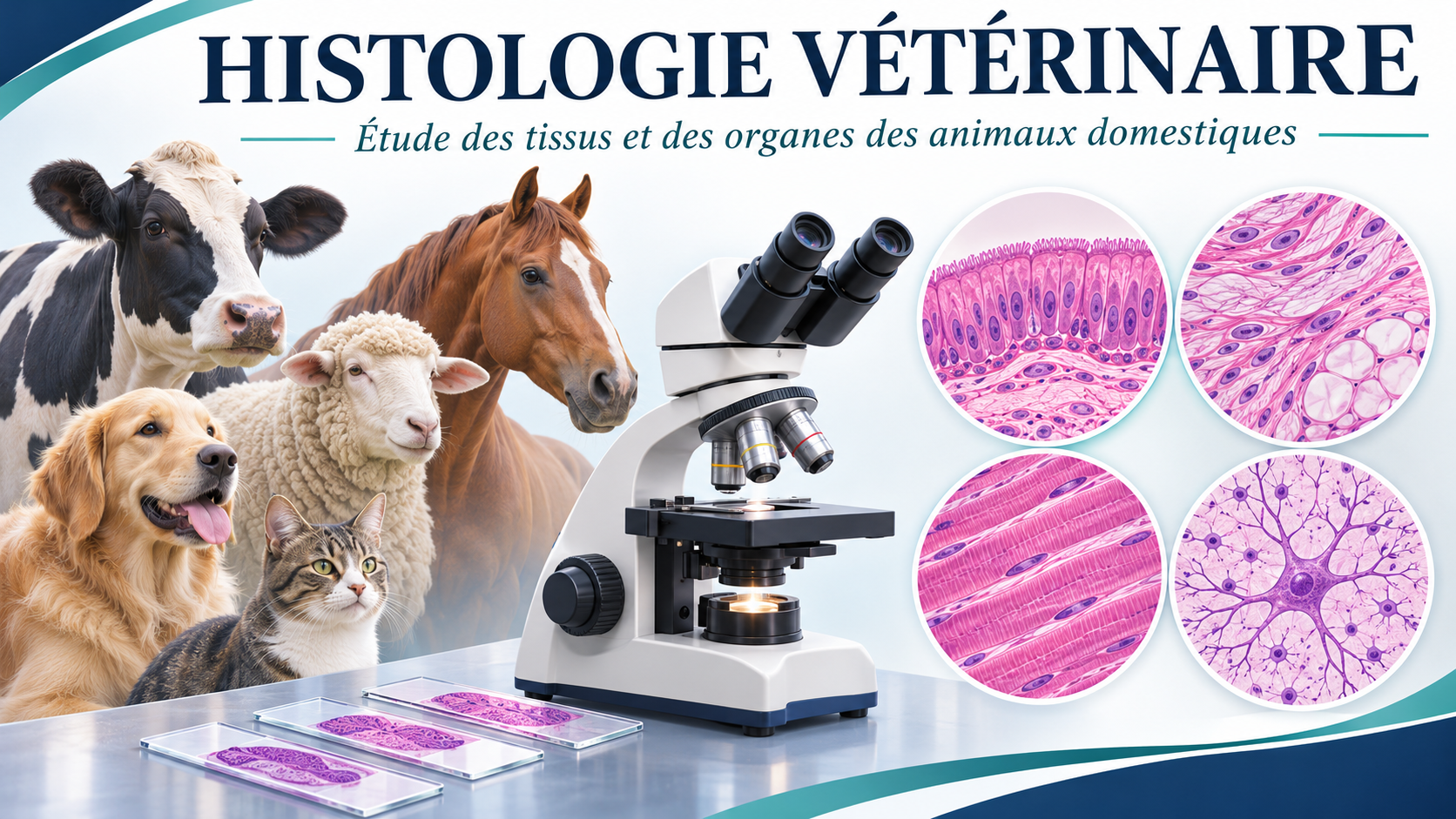
L’enseignement d’Histologie est consacré à l’étude morphologique (topographique et structurale) et fonctionnelle (morpho-physiologie) des tissus et organes des animaux domestiques. Il doit permettre aux étudiants d’acquérir les connaissances de base nécessaires à la compréhension des autres matières en particulier l’embryogénèse, la physiologie, l’immunologie, la biologie médicale, l’anatomie pathologique générale et spéciale.
L’enseignement d’Histologie doit permettre aux étudiants vétérinaires :
- d’effectuer des prélèvements destinés à une analyse histologique,
- d’effectuer et d’analyser des frottis sanguins normaux,
- d’identifier les différents types de tissus en utilisant un vocabulaire adéquat pour exprimer les données de l’observation microscopique. La connaissance des tissus fondamentaux étant le préliminaire indispensable à l’étude des appareils spécialisés,
- d’identifier les caractères morphologiques structuraux des organes et des appareils nécessaires à la compréhension de leur fonction et à l’étude ultérieure de leurs lésions,
- Course creator: Mohammed TITAOUINE
Biochemistry is the branch of science that studies the chemical substances and processes occurring in living organisms. It acts as a bridge between biology and chemistry, explaining life at the molecular level. Also, is the study of the structure, composition, and chemical reactions of biomolecules such as proteins, carbohydrates, lipids, and nucleic acids, and how they support life.
- Course creator: mohamedwalid hamlaoui
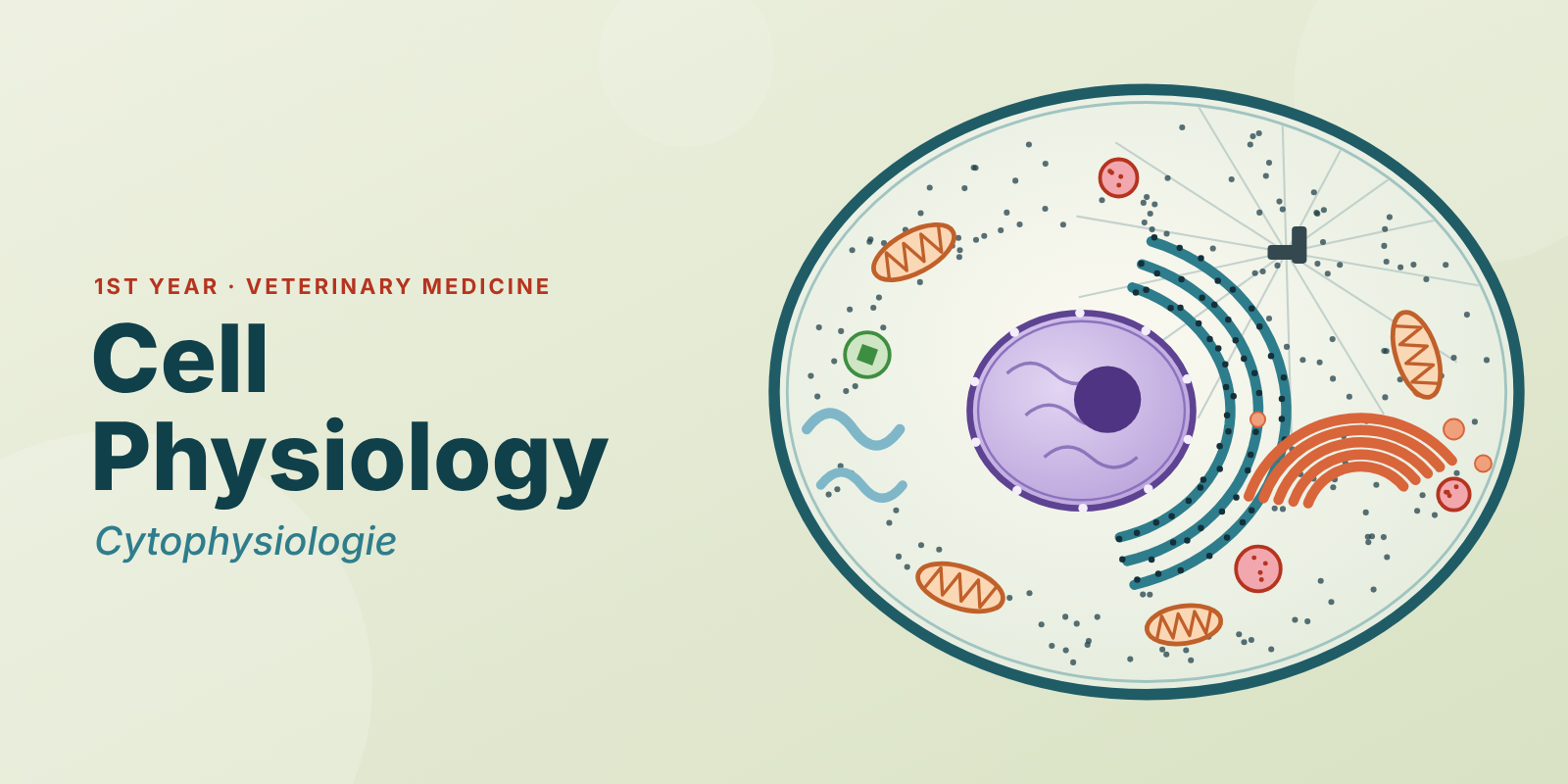
Cell Physiology studies the cell as the basic structural and functional unit of life. The module explores how cells are organised and how they work: their components and organelles, the exchanges and communication between cells and their environment, and the main physiological processes that keep cells alive, allow them to divide and enable them to perform specialised functions within tissues. It provides the cellular foundations needed for later veterinary modules such as histology, physiology, microbiology and pharmacology.
- Course creator: Sara BENREZAK

Medical English is an essential component of modern veterinary training. Here is an introduction and the key points of this module:
International language:
English is the dominant language of scientific research and communication in the veterinary field.
Most scientific publications, conferences, and online resources are in English.
Access to information:
Proficiency in scientific English allows students to access the latest advances and discoveries in the veterinary field.
This makes it easier to read and understand scientific literature, textbooks, and specialized articles.
International mobility:
Proficiency in English opens doors for students who wish to pursue further studies, internships, or work abroad.
It promotes international exchange and collaboration with veterinarians around the world.
- Course creator: abdeldjalil dahmane
- Course creator: Abdelhek Meklid